Your first session will usually combine a health discussion, simple movement checks, a manageable workout and a clear plan for what comes next. It should feel more like a coached starting point than a fitness test you must pass. A good Personal trainer uses this time to learn how your body moves, what you want to change and how much Exercise suits you right now.
You do not need to arrive fit, flexible or sure of what to do. Your trainer should guide each step. They may ask detailed questions and adjust exercises several times. That is useful work. The goal is to set a safe baseline so later sessions match your needs instead of following a generic program.
What happens before you start exercising?
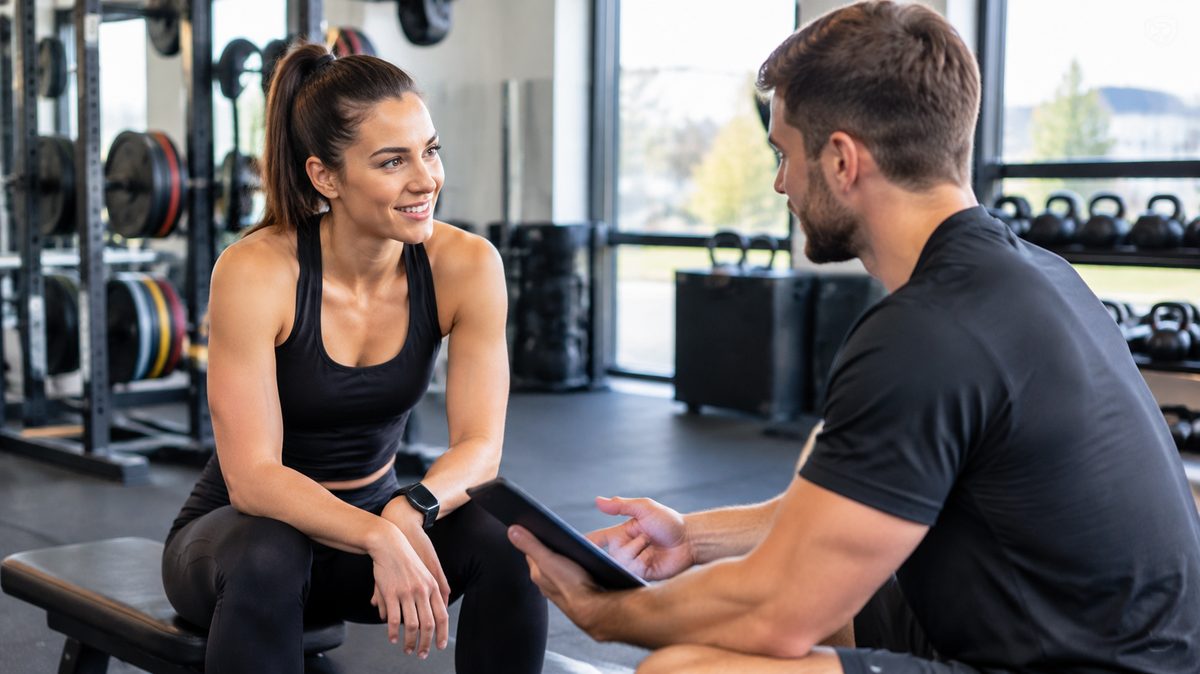
Your trainer will begin with a private conversation or a written screening form. Expect questions about your Health, current activity, work demands, sleep and training history. You should also explain what brought you to personal training. A goal such as “get fit” is a starting point, but your trainer will need to know what that means in daily life.
You might want to climb stairs without stopping, return to sport, feel stronger at work or train without fear after an Injury. These details affect the session. Someone who wants to prepare for a long hike needs a different starting plan from someone who wants less back stiffness after sitting all day.
Tell the trainer about pain, past surgery, medication and any advice from a doctor or physiotherapist. Do not hide a sore knee because you worry the session will be cancelled. That information helps the trainer choose a safer movement or change the range, load and pace.
This first discussion should include Informed consent. The trainer should explain what they plan to do, why they want to do it and any common risks. You can ask questions, decline a test or stop an exercise. Signing a form does not remove your right to speak up during the session.
Will you be weighed or measured?
Some trainers record starting measures, but these should connect to your goal. They may check body weight, waist size, resting heart rate or blood pressure. A Body composition reading may also be offered. It estimates the share of fat and lean tissue in your body, though hydration, recent food and the device used can affect the result.
You can decline measurements that make you uncomfortable. A number is useful only when it guides a sound decision. If your goal is to lift groceries without pain, a movement measure may tell the trainer more than a body fat estimate. If fat loss is your aim, waist size and repeat photos may help show change that the bathroom scale misses.
Good trainers explain how each result will be used and who can see it. They should record personal information with care. They should never use a measurement to shame you or turn the session into a sales pitch.
What movement checks might the trainer use?
Movement checks are simple tasks that show how you control your joints and body position. You may be asked to sit down and stand up, reach overhead, step onto a low box or hold a supported plank. These are observations, not pass-or-fail exams.
The trainer may watch your foot position, knee path, breathing and control. They may then change the task and see what improves. For example, a squat may feel easier when you hold a support or raise your heels. That does not mean your first attempt was wrong. It gives the trainer a practical clue about which version suits you.
A personal trainer is not there to diagnose a medical condition. Sharp pain, unexplained weakness or symptoms such as chest pressure may require assessment by a qualified health professional. A responsible trainer knows when to pause and refer you rather than guessing.
In a common first-session case, a new client may report knee pain during a deep squat. The trainer can reduce the depth, use a box and compare the result. If the pain remains, the right move is to stop that task and seek suitable clinical advice. Pushing through pain would provide no useful measure of Physical fitness.
How hard will the first workout feel?
The first workout should be challenging enough for the trainer to observe your response, but easy enough for you to keep sound form. You may feel warm and slightly out of breath. You should still be able to follow instructions and explain what you feel.
A typical session may include a warm-up, strength movements, short conditioning work and a calm finish. The exact order can change. Someone new to training may use bodyweight movements, resistance bands or light weights. An experienced lifter may use familiar exercises while the trainer checks technique and effort.
The trainer should explain each movement in plain language. They may demonstrate it, let you try and then give one cue at a time. Useful coaching sounds like “push the floor away” or “keep the weight close.” A long lecture while you hold a hard position does not help.
Cardiovascular fitness may be checked with a short walk, bike effort or step task. The trainer may use your breathing, heart rate and reported effort to judge the response. Your first session is rarely the right time for an all-out test. A moderate effort gives useful information without causing needless fatigue.
What should you feel during each exercise?
You should know the aim of the movement and where you are likely to feel effort. A rowing exercise may work your upper back and arms. A squat pattern may work your thighs and hips. Muscle effort, faster breathing and mild shaking can be normal when a task is new.
Sharp pain, sudden dizziness, chest pressure or a feeling that a joint may give way are reasons to stop. Tell the trainer at once. Do not wait until the set ends. Clear feedback lets the trainer lower the weight, change the position or choose another exercise.
Use simple descriptions. Say where you feel the problem, what it feels like and whether it changes as you move. “A sharp pinch at the front of my right shoulder when my hand goes overhead” gives the trainer more information than “my shoulder is bad.”
You also do not need to copy the trainer’s speed. Ask for more time if you need it. A good first session teaches you to control the movement before adding pace or load.
How will the trainer choose your starting level?
Your starting level comes from the full session, not one test. The trainer combines your goals, health screen, training history, movement control and response to effort. This helps them choose exercises you can repeat with confidence.
The first version of an exercise should leave room to improve. If you can complete a movement with steady control and no unwanted pain, the trainer can build from there. If the task is too hard, they can shorten the range, reduce resistance or add support.
This approach sets up Progressive overload. The term means increasing the training demand over time as your body adapts. Progress may involve a little more weight, another repetition, a harder movement or less rest. It does not mean making every session brutal.
Suppose a client starts with a box squat while holding a rail. Once the movement feels stable, the trainer might remove the hand support. Later, the client may hold a light weight. Each change has a purpose. Jumping straight to a heavy squat would make it harder to learn what caused pain, poor control or excess fatigue.
Will you receive a full training plan straight away?
You should leave with a clear next step, though the complete plan may take more time. The trainer may need to review your screening answers and session notes before setting the first training block. That is reasonable when the follow-up is clear.
The plan should state how often you will train, what each session will work on and how progress will be checked. It should also account for activity outside the gym. Walking, sport, manual work and recovery all affect how much training you can handle.
Ask what you should do before the next appointment. You may receive a short home task, such as practising one movement or taking two easy walks. The task should fit your current routine. A large list often gets ignored, while one clear action is easier to complete.
The trainer should also explain how they will adapt the plan if you become sore, miss a week or find an exercise uncomfortable. A useful program can change without losing sight of the main goal.
Will the trainer discuss food during the session?
Nutrition may come up because food habits affect energy, recovery and changes in body weight. The trainer may ask about meal timing, water intake or what you eat around training. They can offer general guidance that fits within their training and qualifications.
Be cautious if a trainer tries to diagnose a food-related condition, tells you to stop prescribed treatment or gives a strict medical diet without the right qualification. Complex needs belong with an accredited practising dietitian or another suitable clinician.
For a first session, practical advice is more useful than a complete food overhaul. If you arrive after eating very little all day, the trainer may suggest a simple pre-session meal for next time. If your goal involves weight change, they should learn your current habits before suggesting targets.
What should you bring to a Bendigo training session?
Wear clothes that let you bend, reach and walk with ease. Choose clean training shoes that suit the planned activity. Bring water, any required medication and relevant guidance from a health professional. If you use an inhaler, know where it is before the workout starts.
Bendigo weather can affect sessions held outdoors or in a warm training space. On hot days, lighter clothing and extra water can help. In cold weather, wear layers that you can remove after the warm-up. Ask where to meet, where to park and whether there is a place to change before you leave home.
Eat as you normally would unless your trainer has given a sound reason to do something different. Avoid trying a strong pre-workout product for the first time. It can change your heart rate and make it harder to judge your normal response.
Arrive about ten minutes early if forms still need to be completed. This protects your training time and gives you space to raise private health details before the gym floor becomes busy.
How should you judge the session afterwards?
Judge the session by the quality of the coaching, not by sweat or soreness. You should understand what the trainer learned, why they chose the exercises and what happens next. You should also feel that your questions were taken seriously.
Mild muscle soreness can appear a day or two after unfamiliar exercise. Severe soreness that affects basic movement is not proof of a better workout. The trainer should set a starting dose that lets you recover and return.
Before leaving, confirm how to report pain or unusual symptoms. Ask whether the next session will repeat key movements or add new work. The answer should connect to your stated goal.
A productive first session often feels simpler than expected. That simplicity lets the trainer see your real starting point. It also gives you time to learn the space, the equipment and the coaching style without being rushed.
What should you do before you walk through the door?
- Write down your main goal in one sentence and link it to a real daily task.
- List past injuries, current pain, medication and advice from health professionals.
- Pack suitable clothes, shoes, water and any medication you may need.
- Prepare questions about the workout, progress checks and contact after the session.
Your single next step is to send your trainer your health details and main goal before the appointment, so the first session can start with a safe plan built around you.