The best way to start personal training as a beginner is to learn a few safe movements, train at a level you can recover from, and build consistency before chasing hard results. You do not need to get fit before your first session. You also do not need good coordination, gym knowledge, or a strict diet. A skilled Personal trainer will meet you at your current level and give you a clear next step.
Starting from scratch can feel exposing. You may worry that everyone else is fitter or that you will fail basic exercises. Those fears are common, yet they rarely match what happens in a well-run beginner session. The coach should explain each task, show you how it works, and adjust it until you can do it with control.
The main idea is simple: your first training block should build skill and trust. Fitness gains follow when you can repeat safe work each week.
What should happen before your first workout?
Your coach should begin with a conversation and a basic movement check. This helps them understand your health, training history, daily routine, pain, confidence, and reasons for starting. It also gives you a chance to explain what has stopped you before.
Be honest about old injuries, medicine, recent surgery, dizziness, chest symptoms, or pain that changes how you move. A trainer does not diagnose medical conditions. They may ask you to speak with your doctor or a Physical therapy provider before training. That referral protects you and gives the coach useful limits to work within.
The movement check should feel calm. It may include sitting down and standing up, reaching overhead, walking, or holding a light object. These tasks are not a test you pass or fail. They show the coach where to start.
In my experience, beginners often say they have no strength when the real issue is uncertainty. Once they learn where to place their feet and how to brace, the same movement feels far easier. Good coaching removes guesswork before adding effort.
How hard should beginner sessions feel?
Your first sessions should feel useful, not punishing. You should finish knowing that you trained while still feeling able to manage normal life the next day. Mild muscle soreness can happen. Severe pain, nausea, shaking, or soreness that lasts most of the week means the starting dose was too high.
A useful beginner effort is about five or six out of ten. You should have several good repetitions left when each set ends. This gives you room to learn technique without fatigue changing your movement.
Exercise works like any new skill. You improve through clear practice and repeat exposure. Exhaustion does not prove that a session worked. It often makes the next session less likely.
A careful coach will watch your breathing, speed, posture, and facial expression. They will also ask how the movement feels. Those details guide the session better than a fixed plan copied from an advanced client.
Which movements should you learn first?
Beginner training should focus on movement patterns that support daily life. You may practise sitting and standing, pushing an object, pulling a handle, stepping, carrying weight, and controlling your trunk. The exact version should match your body and current skill.
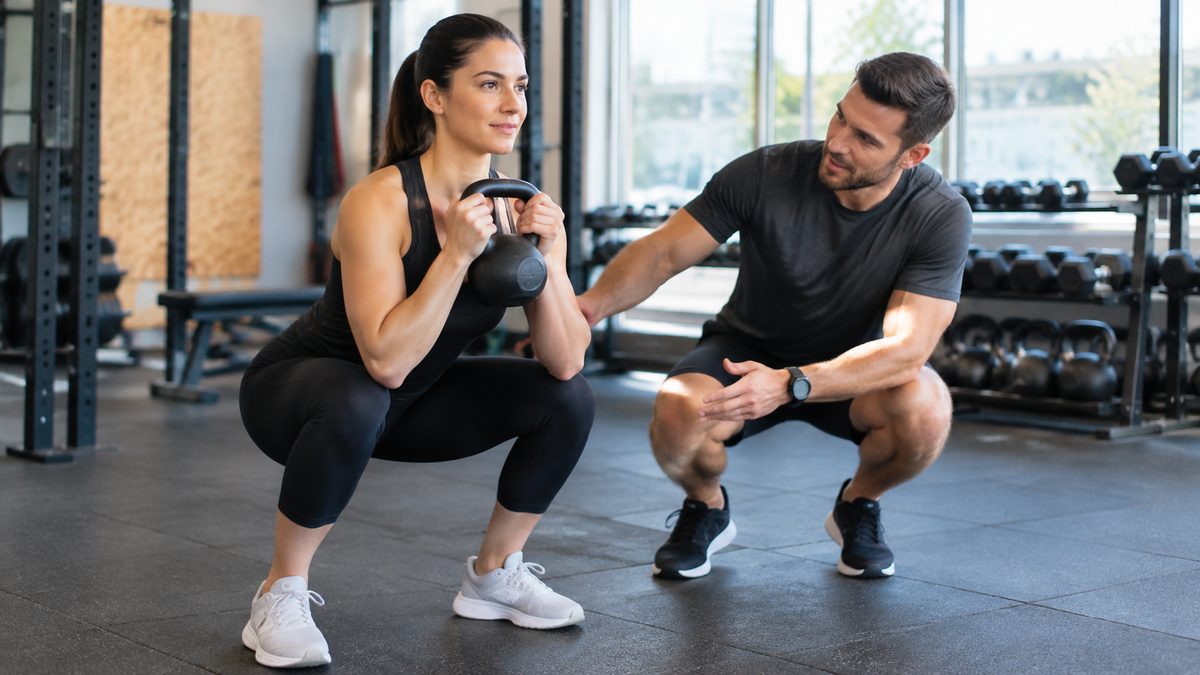
For example, a squat may begin as a sit-to-stand from a high bench. A push-up may begin against a wall. A loaded carry may use one light dumbbell over a short path. These versions still build useful ability. Making an exercise easier is smart coaching, not a sign of failure.
Strength training should form a large part of the plan because it helps you handle work, stairs, lifting, and other daily demands. It can also make later training easier because your muscles and joints gain more capacity.
Aerobic exercise should start at a pace you can control. Walking, cycling, rowing, or simple circuits may work well. You should usually be able to speak in short sentences. Early cardio should improve your stamina without draining the energy needed for movement practice.
Machines, free weights, resistance bands, and body-weight drills can all be useful. The best tool is the one that lets you perform the chosen movement safely and repeat it with confidence.
How does a trainer keep the plan safe?
Injury prevention starts with choosing the right exercise dose. It does not come from avoiding all effort. Your body needs a manageable reason to adapt, followed by enough recovery to complete the next session well.
A Personal trainer should adjust the range of motion, load, speed, or support when a movement causes poor control. They should never tell you to push through sharp pain. Normal muscle effort may feel warm or tiring. Joint pain, sudden pulling, numbness, or a clear loss of strength needs attention.
Technique also needs context. There is no single perfect stance for every person. Limb length, joint shape, injury history, and confidence can change what feels secure. The aim is a repeatable movement that places stress where intended.
When beginners rush, they often change several things at once. They add weight, train more days, and cut food too hard. If they then feel sore or tired, no one knows which change caused it. A safer plan changes one main training demand at a time.
How will you make progress without doing too much?
Progressive overload means slowly asking your body to do more than it could before. More does not always mean heavier weight. You can add a repetition, improve control, extend the range, or reduce the rest period. One small change is enough.
A coach may keep the same core movements for several weeks. This can seem simple, but repetition lets you see real improvement. If every session uses new exercises, you spend most of your time learning instead of building capacity.
A beginner might start with two sets of eight controlled sit-to-stands. The next step could be two sets of ten. Later, the seat may be lower or the client may hold a light weight. Each step builds on a skill already learned.
What I found was that beginners often notice life changes before visual changes. They walk up a hill with less effort. They lift shopping bags with more control. They stop needing their hands to rise from a low chair. These signs show that Physical fitness is improving, even when body weight stays the same.
Your trainer should record enough information to guide the next session. Useful notes include the exercise version, load, repetitions, effort, and any pain. Memory alone is a weak way to manage progress.
What should your first goal look like?
Your first Goal should focus on actions you can control. A result such as losing weight or becoming stronger may take time. An action such as completing two sessions each week tells you what to do now.
Good Goal setting links the desired result to a weekly behaviour. If you want to walk around Bendigo with less fatigue, your plan may pair two coached sessions with one steady walk. If you want to lift your child with more ease, the plan may focus on leg strength, carrying, and safe lifting practice.
Use a short review period. Four weeks is long enough to build a pattern and short enough to keep the plan clear. At the review, check attendance, movement quality, training loads, recovery, and changes in daily tasks.
A useful goal should be specific to your life. Completing ten push-ups has little value if you do not care about push-ups. Training becomes easier to sustain when each exercise connects to something you want outside the session.
How often should a complete beginner train?
Most beginners can start with two planned sessions each week. This gives regular practice while leaving recovery time between sessions. One weekly session can still help when it is paired with a simple home plan. More sessions are useful only when your schedule and recovery can support them.
Rest days do not require total rest. Easy walking and normal daily movement may help stiffness settle. Sleep, enough food, and regular fluids also support recovery. You do not need costly powders or a complex routine to begin.
Place sessions where they can survive a normal week. A plan that requires perfect mornings, no family needs, and endless motivation will soon break. Choose times you can keep when work gets busy or Bendigo weather changes your day.
If you miss a session, return to the next planned one. Do not double the workload to make up for it. Consistency comes from restarting quickly, not from maintaining a perfect record.
What should you expect during the first month?
The first month should make training feel more familiar. You will learn the session flow, the names of key movements, and how different effort levels feel. Your coach will learn how quickly you recover and which cues make sense to you.
Week one may involve light practice and longer explanations. During later sessions, the same movements should feel smoother. Loads can rise when your technique remains steady and the current work no longer feels hard enough.
Some beginners expect rapid changes in body shape. Early gains often show up in coordination and confidence first. Your nervous system becomes better at using the strength you already have. Visible change usually takes longer and depends on training, food, sleep, and your starting point.
One common beginner case is a person who feels embarrassed by poor balance during the first session. A good coach adds support and shortens the movement. Within several weeks, the client may need less support because the task is now familiar. That change matters because confidence grows from proof, not pep talks.
How can you tell whether the coaching suits a beginner?
The right coach explains why you are doing each movement in plain language. They invite feedback and change the plan when your body gives useful information. You should feel coached rather than judged.
Watch how the trainer responds when you struggle. A strong coach changes the task, gives one clear cue, and lets you try again. A poor response is to shame you, compare you with another client, or treat pain as weakness.
You should also know what happens between sessions. A beginner plan may include a short walk, a mobility drill, or a small practice session at home. The task should be easy to remember and clear enough to complete without supervision.
Progress reviews should use more than the bathroom scale. Useful measures include session attendance, loads lifted, walking comfort, movement control, and how well you manage daily tasks. Choose measures tied to the reason you started.
What can you do before booking your first session?
You do not need to buy new gear or complete a private fitness test. Wear clothes that let you move and shoes that feel secure. Bring relevant medical advice and a list of current medicines if health issues may affect training.
Write down what you want to make easier in daily life. Then note any pain, fear, or past gym experience that could affect the plan. This gives your coach better information than saying you only want to get fit.
Ask how the trainer introduces beginners, adjusts painful movements, records progress, and handles referrals. Clear answers show that the coach has a process for people who are starting from scratch.
Your single next step is to book an introductory session with a Bendigo trainer and ask them to build your first four weeks around two repeatable sessions, safe movement practice, and one goal from your daily life.