
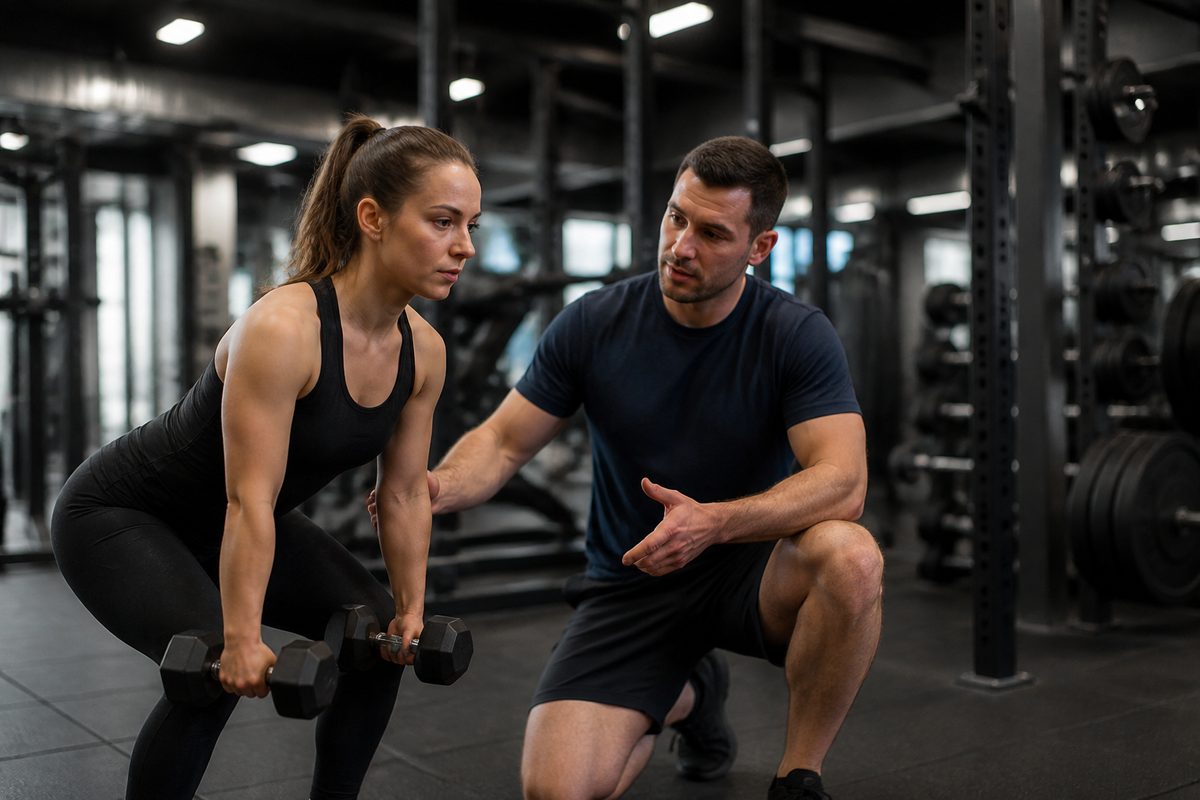
Choose personal training if you need expert guidance, accountability or a plan built around your body; choose a gym membership if you can train safely and stay consistent on your own. Your best option comes down to the support you need, how much freedom you want and what your budget can sustain. Some people also benefit from using both. A Personal trainer can teach the key skills first, while a gym membership gives you more chances to practise them.
The cheapest option is not always the one with the lowest weekly fee. A membership that you rarely use offers poor value. Personal training can also waste money if you rely on the session but do nothing between visits. The right choice is the one that helps you complete useful Exercise week after week.
How much help do you need when you exercise?
Personal training suits people who do not know what to do, feel unsure about technique or keep losing momentum. A trainer chooses suitable exercises, explains how to perform them and changes the plan as you improve. You spend less time guessing which machine, weight or routine to use.
A gym membership gives you access rather than close coaching. Staff may show you where things are or explain basic safety rules, but standard membership fees rarely include ongoing program design. You decide what to do, how hard to work and when to change your routine.
Think about your last attempt to become active. If you arrived with a clear plan and followed it for several months, independent gym use may fit you. If you wandered between machines, copied other members or stopped attending after a few weeks, extra support may solve the real problem.
I often see one pattern in new gym users. They choose exercises based on what looks familiar, repeat the same light routine and leave without knowing whether it moved them closer to their goal. A few coached sessions can give that person a simple plan, clear technique cues and a way to measure progress. That knowledge keeps helping after the sessions end.
Which choice makes it easier to stay consistent?
A booked personal training session creates a firm appointment. Someone expects you to arrive and knows whether you completed the work. That structure helps if you tend to delay Exercise when work, family duties or low energy get in the way.
A gym membership offers more freedom. You can train early, after work or during a quiet part of the day, subject to the venue's opening hours. This can work well for shift workers and parents whose weekly routines change. Yet freedom only helps when you use it. An open-ended plan such as “I will go when I have time” often fails because nothing protects that time.
Test your likely behaviour before choosing. Put three training times in next week's calendar. Treat them as real appointments. If you complete all three without a reminder, you may have enough self-direction for a membership. If each session gets moved or dropped, a standing appointment with a trainer may provide better value.
Consistency also depends on travel. A Bendigo gym near your home, workplace or usual school route may beat a more impressive venue across town. Ten extra minutes each way can turn a short workout into a task that feels too large on a busy day.
Do you know how to train safely and make progress?
A trainer has the edge when technique, pain history or low confidence limits you. Good coaching breaks each movement into steps and selects a level you can control. It also gives you instant feedback. A video can show the shape of a squat, but it cannot tell you why your heel lifts or which change suits your body.
This matters in Strength training. Progress requires enough resistance to challenge the muscles, followed by time to recover. Many beginners stay with the same easy weights for months. Others add weight too fast and lose control. A trainer can set a starting point, track repetitions and increase the task when your form remains sound.
Independent training is a sound choice when you already understand basic movement, load and recovery. You should be able to set up the Exercise equipment, adjust it to your size and stop when pain or poor form changes the movement. You also need a clear method for progression, such as adding a repetition before adding more weight.
A trainer is not a substitute for medical care. New chest pain, fainting, severe shortness of breath or a fresh injury needs suitable health advice. If a doctor or allied health professional has given you limits, share them before training starts.
What are you actually trying to achieve?
Your goal should shape the service you buy. General Physical fitness often needs a simple mix of resistance work and aerobic activity. A confident person can build that routine in a standard gym. Someone preparing for a specific event, returning after a long break or struggling with repeated setbacks may reach the same goal faster with a tailored plan.
For Weight management, neither option works by itself. Training can increase energy use, help preserve muscle and improve daily function. Food intake, sleep and everyday movement still affect the result. A trainer can help you set useful activity targets and monitor habits within their scope, but no session can cancel an unsuitable weekly routine.
A common mistake is choosing the service before defining the result. “Get fit” gives you no way to judge progress. A clearer goal might be completing two full-body sessions each week, walking up a local hill without stopping or lifting a set load with sound form. Once the outcome is clear, ask which option gives you the fewest barriers.
Personal training can also suit a short learning goal. You may book coaching to learn safe Strength training, build a six-week plan and gain confidence with unfamiliar equipment. You do not need to assume that coaching must continue forever. Gym access can then support independent practice.
Which option gives you better value for your budget?
A gym membership usually has the lower direct weekly cost. It may include long opening hours, many machines, free weights, change rooms and group classes. Its value rises when you attend often and use the included services. Check joining fees, notice periods, access limits and charges for classes before comparing offers.
Personal training costs more per visit because you buy a professional's time and attention. The fee may cover planning, technique checks, progress reviews and support between sessions. Compare what is included instead of comparing session numbers alone. Detailed local prices belong in a dedicated cost guide, but the decision rule is simple: pay for coaching when coaching removes a barrier that access alone cannot fix.
Set a monthly Budget that you can keep for at least twelve weeks. Then compare realistic use. If a low-cost membership sits unused, its cost per completed workout is high. If one coached session helps you complete two independent workouts as well, the higher fee may create more useful training.
A mixed plan can control cost. You might meet a trainer once a week and use the gym alone on another day. Another option is a short block of coaching followed by independent membership. Small-group coaching can also provide instruction and accountability at a lower cost per person, though it offers less individual attention.
How much choice and privacy do you want?
Large gyms offer variety. You can switch between cardio machines, cable stations, free weights and classes. This suits people who enjoy changing their routine or want to train with a friend. It can also make busy periods frustrating when the Exercise equipment you planned to use is taken.
Personal training may take place in a commercial gym, a private studio, outdoors or at home. A quiet studio can feel easier for someone who dislikes crowds or feels watched while learning. A commercial setting may suit someone who wants broad equipment access and plans to train alone between appointments.
Privacy affects effort more than many comparison guides admit. A person who feels tense in a crowded weights area may avoid the exercises they need. A private setting can remove that block. The opposite can also happen. Some people gain energy from a busy room and find a private session too intense. Choose the setting where you can focus and return without dread.
When does a gym membership make more sense?
Choose a gym membership when you can plan your own sessions, use equipment safely and train without an appointment. It is also a strong fit when you want frequent access, enjoy classes or prefer to change training times each week.
A membership is likely to serve you well if you can answer these points:
- You know which days you will train and have protected those times.
- You have a written routine tied to a clear goal.
- You understand the main movements in that routine.
- You know how to adjust loads as you improve.
- You will ask for help when equipment or technique is unclear.
Do not buy based on the size of the facility alone. Visit at the time you expect to train. Check whether racks, benches and cardio machines are available. Notice parking, cleanliness, noise and how staff respond to questions. Daily friction predicts whether you will keep attending.
When is training the stronger choice?
Choose personal training when uncertainty, poor follow-through or a complex starting point has stalled you. Direct coaching is especially useful for a complete beginner, someone nervous in a gym or a person who has repeated the same routine without progress.
It also makes sense when mistakes have a high cost. If you need to learn a technical lift, work within health limits or return to activity after professional clearance, close supervision can help you apply the plan correctly. The trainer should stay within their professional scope and work with your health team when needed.
Imagine two people with the same goal. The first has trained for years, logs every workout and only needs access to suitable weights. A gym membership removes the main barrier. The second has never lifted, worries about injury and stops whenever results slow. More equipment will not fix those problems. Coaching addresses them directly.
Do not judge personal training by how exhausted a session makes you. A useful session gives you better skill, a sensible dose of work and a clear next step. Soreness is not proof of quality. Progress should appear in measures tied to your goal, such as improved form, more controlled repetitions or better work capacity.
Could using both give you the best result?
A combined approach often offers the best mix of guidance and freedom. The trainer teaches, checks and updates the plan. The membership gives you affordable access for practice. This works only when each part has a clear job.
For example, you could use one coached session to learn two main lifts and complete one independent session later in the week. Record the weights, repetitions and any pain or confusion. Bring those notes to the next appointment. The trainer can then adjust the plan based on real use rather than guesswork.
A combined plan fails when every independent workout feels too hard to start. In that case, use more support at first and reduce it as your confidence grows. It also fails when coached sessions become random workouts with no link to what you do alone. Ask for one written plan that covers both settings.
How can you make the final decision?
Score each option against your real behaviour, not the person you hope to become next month. Rate your need for instruction, accountability, schedule freedom, privacy and equipment access. Then place your Budget beside the score.
- Write one result you want to reach within twelve weeks.
- Choose how many sessions you can complete in a normal week.
- List the main reason previous attempts stopped.
- Select the option that deals with that reason most directly.
- Review attendance and progress after four weeks.
If lack of knowledge or follow-through is the main barrier, start with personal training. If access is the barrier and you already have the skills, choose a gym membership. If you need teaching but want more weekly practice, combine them.
Write down your main training barrier today, then choose the Bendigo option that removes that barrier for the next twelve weeks.